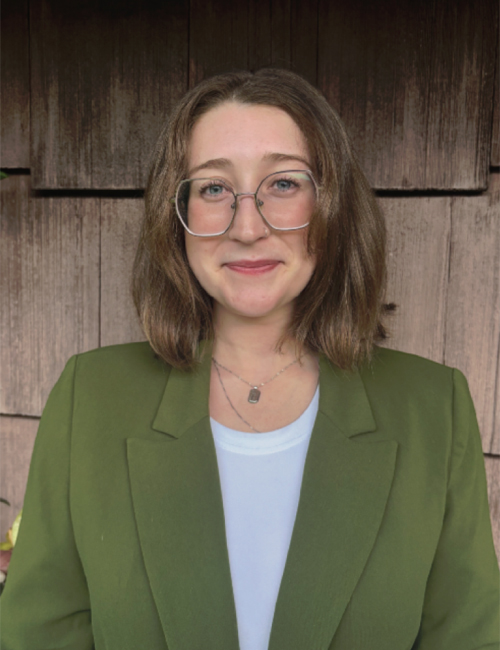
Olivia LeValley

Olivia LeValley
Outreach Coordinator
Bringing Veterans Home
Inside the outreach work of Bringing Veterans Home
When Olivia LeValley, Outreach Coordinator for Community Hope’s Bringing Veterans Home program, talks about outreach, she doesn’t describe a typical day. There really isn’t one.
Her work takes her across six New Jersey counties—to libraries, shelters, food pantries, veterans organizations, community meetings and anywhere else someone may be experiencing housing instability.
Sometimes outreach begins with information. Sometimes with a hygiene kit, a pair of socks or simply a conversation.
And sometimes, the most important thing Community Hope can offer is something less tangible:
The promise to come back.
That became particularly clear when Olivia and the Bringing Veterans Home team recently began working in Union County. On their first day of outreach there, they encountered four veterans experiencing homelessness. The veterans knew help was available. But they weren’t ready to accept it. “They felt failed by other agencies,” Olivia explains. In some cases, the distrust isn’t directed at any one organization. It comes from feeling let down by systems that were supposed to help.
So Community Hope didn’t push.
Instead, the team established a regular outreach presence at the Elizabeth Public Library.
They provided contact information, explained the program and made sure the veterans knew
when Community Hope would be back.
“The most important thing is showing up.”
“We’re going to be there every single month,” Olivia says. “They know where to find us.”
That consistency is a critical part of outreach—and one that can be easy to overlook.
You Can’t Always See Housing Insecurity
One of the challenges Olivia encounters is a persistent misconception about what homelessness looks like.
There is no single profile.
Someone experiencing housing instability may appear completely self-sufficient. They may be staying temporarily with friends, moving frequently from place to place, or sleeping in a vehicle. They may simply be doing everything they can to avoid asking for help.
“You can’t really look at someone and say they’re having housing instability or they’re experiencing homelessness,” Olivia explains.
She recalls meeting people who seemed entirely “put together,” but were quietly struggling. At one food pantry, someone approached her table initially talking about friends who might need assistance. Then the person returned.
“Actually,” they said, “I may benefit from services myself.”
That is why outreach begins with conversation rather than assumption.
For Veterans, Asking for Help Can Be Especially Difficult
There can be another layer for veterans.
Military culture often emphasizes independence, resilience and accomplishing the mission. After leaving that environment, acknowledging the need for help can be difficult. Sometimes, Olivia says, veterans feel they should be able to solve the problem themselves.
“You want to do it on your own. You feel like you have to succeed on your own.” Community Hope works to replace that reluctance with trust.
“It’s important to show up for our veterans and build that trust so that they can see that it’s okay to ask for help. It’s okay to ask for support.” And that trust may not develop during the first conversation—or the second.
For Olivia, that is part of the work.
Not every outreach story ends with someone immediately saying yes. Sometimes success begins simply by making sure a veteran knows that someone will still be there tomorrow. “It is patience,” she says. “It is showing up consistently and being patient and just giving them what they need at their time.”
This Is What Your Support Makes Possible
Outreach like this takes time.
It takes people who return month after month. People who build relationships throughout a community. People who listen closely enough to recognize when someone may need help—even when that person isn’t yet ready to ask for it.
And when a veteran does say, “I need help,” that first conversation activates much more. Community Hope can begin an intake in the field, assess the veteran’s housing situation and immediate needs, verify veteran status, connect them with case management and emergency shelter when necessary, and begin identifying the housing and additional supports that can help them move toward stability.
Behind that work is an interconnected team: Case managers. Housing navigators. Landlords and realtors. Community organizations. Veterans’ groups. Mental health and substance-use services. Employment resources. Senior services. And many others who help remove the barriers that can stand between a veteran and a stable home.
Because for Community Hope, success is about more than finding an apartment.
As Olivia puts it:
“Success doesn’t end when they get a key in their hand.”
It means helping someone remain housed, build stability and ultimately regain independence.
That can include connections to mental health services, support groups, senior services, utility assistance, furniture, employment resources and other community-based supports.
Your Gift at Work
Support for Community Hope helps make work like this possible:
- Reaching veterans in the communities where they live
- Building trust with people who may have stopped believing help will come
- Connecting veterans quickly to intake, case management, and emergency support
- Navigating housing opportunities and relationships with landlords
- Coordinating services that help veterans remain stable once they are housed
- Creating a path toward independence—not simply a temporary solution
This is the work behind the outcome.
And right now, new donors have an extraordinary opportunity to help make more of it possible.
Your First Gift Can Go 7x Further
Through Community Hope’s 7x Challenge Campaign, first-time individual donations can help unlock a transformational matching gift—multiplying the impact of new support across the organization.
For Olivia and the Bringing Veterans Home team, creating change often begins simply:
Being there.
Listening.
Earning trust.
And returning again and again.
For the veterans Olivia met in Union County, the moment when they are ready to accept help may not have arrived yet.
Community Hope will keep showing up anyway.
“So that when they are willing to connect,” Olivia says, “they know that we’re there for
them. They know that they can trust us to be there for them.”
And when they’re ready, we can help them.
Showing up takes all of us.
Make your first gift today and help Community Hope keep showing up for veterans,
individuals and families throughout New Jersey.